News


UGA nonprofit leadership program graduates 2026 class

The University of Georgia strengthens nonprofit leadership across the state and nation through the Executive Leadership Program for Nonprofit Organizations (ELPNO), a signature program of the UGA J.W. Fanning Institute for Leadership Development. 

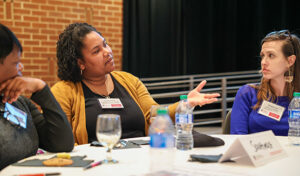
Twenty-four nonprofit professionals from across Georgia, Wisconsin, Virginia and Connecticut graduated from the weeklong program, held Jan. 11-16 at the UGA campus in Athens. The experience is designed to help nonprofit leaders build practical skills that support their organizations and the communities they serve. 

“Year after year, this program continues to expand the leadership capacity of practicing nonprofit leaders to strengthen their organizations and drive impact,” said Julie Meehan, UGA Fanning Institute public service faculty member. “Over the years, it has grown into a transformative experience that not only elevates individual leaders but also amplifies the effectiveness and reach of the nonprofit community.” 

Since 2007, the UGA Fanning Institute has guided more than 300 nonprofit leaders representing over 200 organizations through this program, which focuses on key aspects of nonprofit leadership, including personal leadership development, nonprofit finance, strategic thinking and problem-solving. 

In addition to technical content, the program emphasizes peer learning and connection. Participants represent a wide range of missions and challenges, and many say the chance to learn from one another is just as valuable as the curriculum itself. Trena Kennedy, CFO of Jewish Kids Group and a 2023 participant, said she appreciated hearing how leaders in different organizations navigate obstacles. 

“All organizations are different and have different challenges, so it was nice to hear how they get through their specific challenges, and to hear that it’s possible to get through those challenges nonetheless,” she said. 

For others, the experience highlighted shared struggles across the sector. 

“My nonprofit is worldwide but unique to Georgia, so there is no one else that mirrors what I do. But by coming to this particular training made me aware of people in other organizations that we’re struggling with similar things,” said Katheryne Fields, Executive Director of the Georgia Rotary Student Program and 2025 participant. 


2026 ELPNO graduates are: 

Elizabeth Banks, Hope Atlanta
Stephen Barwick, Best Buddies in Georgia
Lawson Bauch, Kids First Family Fellowship Inc.
Rebecca Chambers, Special Operations Fund
Dawn Charleston-Green, Georgia CASA
Shannon Clark, Center for the Visually Impaired
Nick Deffley, Southeast Sustainability Directors Network
Kellie Glenn, Hope Atlanta
Hanah Goldberg, GEEARS: Georgia Early Education Alliance for Ready Students
Kayla Heering, Jewish Fertility Foundation
Jennifer Jones, Apparo Academy
Tara Jones, Coastal Georgia Indicators Coalition
Ellen Kinsey, the Warrior Alliance
Terrill McFarland, the Warrior Alliance
Dyonne Miles, MAAC Michael Montini, Avalon Action Alliance
Erin Mundy, Georgia Statewide AHEC Network Program Office
James Rankhorn, Georgia 2nd Amendment Inc.
Madison Sanders, Family Promise of Athens
Sharon Steele, Habitat for Humanity DeKalb
Lannia Stenz, Gilda’s Club Madison
Jennifer Tolman, Dignity Grows Inc.
Kari Viola-Brooke, Child Enrichment
Mary Wearn, Georgia Humanities 


Writer: Cat Elrod catherine.elrod@uga.edu and Roy Parry, roy.parry@uga.edu

UGA nonprofit leadership program graduates 2025 class

The University of Georgia continues to help nonprofit professionals from around Georgia sharpen their personal and organizational leadership skills through a long-standing leadership program.

Twenty-two nonprofit leaders attended the 2025 Executive Leadership Program for Nonprofit Organizations, held Jan. 12-17 at the UGA J.W. Fanning Institute for Leadership Development.

“I wasn’t sure what to expect, but this was phenomenal,” said Luke Fletcher, vice president of recruitment, placement and retention at Construction Ready, a Georgia nonprofit organization which provides construction job training programs. “I didn’t just learn theory. The faculty gave me relevant skills like how to communicate uniquely with different areas of my organization and presented it in a way that I can implement it and replicate it with staff.”

The UGA Fanning Institute has led the program since 2007, developing nonprofit leaders both in Georgia and from around the nation.

“Nonprofit organizations play a huge role in helping to address community challenges,” said Julie Meehan, UGA Fanning Institute public service faculty member. “In turn, nonprofits require leaders equipped to not only guide operations but also foster community collaboration and look to the future.”

For one week each year, UGA Fanning Institute faculty along with experts from around the country work with participants on all facets of leading a nonprofit organization, from learning about one’s personal leadership style to nonprofit finance and problem solving.

“I really learned a lot about nonprofit finance and gained confidence in my ability to understand that topic,” said Sonia Robinson, executive director of Lowndes and Echols counties Court Appointed Special Advocates (CASA), a nonprofit organization dedicated to improving the lives of children in foster care in Georgia. “I received great instruction that I could understand, and I will take that confidence back to my organization.”

Through the Executive Leadership Program for Nonprofit Organizations, the UGA Fanning Institute covers both the technical and interpersonal leadership skills required in the nonprofit world. At the same time, the program connects participants to both each other and alumni.

“The nonprofit sector brings together leaders across backgrounds who all face unique challenges,” said Sayge Medlin, UGA Fanning Institute public service faculty. “Connecting nonprofit leaders through the Executive Leadership Program for Nonprofit Organizations allows participants to learn from each other during the program and after they graduate.”

Over the years, more than 300 nonprofit leaders from over 200 organizations have completed the program.

“I see that nonprofit leaders face many of the same challenges as I do,” said Jessica Blackrick, program director of Southeast Georgia CASA of Action Pact, Inc. “Attending this program helped me gain confidence in my abilities as a leader.”

2025 Executive Leadership Program for Nonprofit Organizations graduates are:

  • Jessica Blackrick, Southeast Georgia CASA – Action Pact, Inc., Waycross
  • Jamie Bormann, Crisis Line & Safe House of Central Georgia, Inc., Macon
  • Mary Crawford, Girls on the Run South Georgia, Valdosta
  • Windy Cruz, Center for the Visually Impaired, Atlanta
  • Erica Davis-Woods, The Multi-Agency Alliance for Children (MAAC), Atlanta
  • Prabodh Devkota, New American Pathways, Atlanta
  • Lisa Dwyer, GEEARS: Georgia Early Education Alliance for Ready Students, Atlanta
  • Katheryne Fields, Georgia Rotary Student Program, Griffin
  • Luke Fletcher, Construction Ready, Warner Robins
  • Esteban Gonzalez, Atlanta Community Food Bank, Atlanta
  • Chantal Hill, The Warrior Alliance, Atlanta
  • Kimberly Hinton-Poole, NeighborWorks Columbus, Columbus
  • Cynthia Jenkins, Southern Crescent Habitat for Humanity, Jonesboro
  • Kimberly Keegan, Ashton Hope Keegan Foundation, Inc., Watkinsville
  • Kimberly King, The Sexual Assault Center of Northwest Georgia, Inc., Rome
  • Amanda La Kier, JF&CS, Dunwoody
  • Jackla Lawson, The Treehouse Children’s Advocacy Center, Thomasville
  • Andrea Rivera, Avalon Action Alliance, Atlanta
  • Sonia Robinson, CASA of Lowndes and Echols Counties, Inc., Valdosta
  • Sharon Robinson, Wellstar Health System Foundation, Atlanta
  • Chanteasea Swain, Camp Sunshine, Decatur
  • Raymond Whitaker, Mission Roll Call, Sanford, N.C.

ELPNO Class of 2025

For more information on the Executive Leadership Program for Nonprofit Organizations, click here.

Grant will help MENTOR Georgia expand literacy mentoring program

A $52,250 grant will allow a literacy mentoring program developed at the University of Georgia to expand to additional communities in the state.

Supported by funding from the Sandra Dunagan Deal Center for Early Language and Literacy at Georgia College & State University, MENTOR Georgia – which is housed at the UGA J.W. Fanning Institute for Leadership Development – will support community-based organizations in customizing and implementing a novel literacy mentoring program in four additional Georgia communities over the next year.

“Because research shows that mentors can have an impact on children’s literacy learning, we are thrilled to support MENTOR Georgia’s efforts to create and pilot a scalable volunteer training program for literacy mentors,” said Lindee Morgan, executive director of the Deal Center.

This will bring the total number of communities utilizing the literacy mentoring program to six by summer 2025.

Leslie Hale, MENTOR Georgia executive director

“Supportive relationships and the ability to read are among the most foundational building blocks of a happy, healthy life,” said Leslie Hale, executive director of MENTOR Georgia and the creator of the literacy mentoring concept. “We’ve seen significant interest in how schools and programs can unify these powerful levers of success into a single program, and I’m excited to partner with the Deal Center to scale this concept in new communities.”

Coordinated by the UGA Fanning Institute, MENTOR Georgia is the statewide affiliate of MENTOR: The National Mentoring Partnership. It supports youth development by providing professional learning, capacity-building, and training in evidence-based best practices to youth mentoring programs around the state.

MENTOR Georgia helped introduce the first literacy mentoring program in Colquitt County in the 2021-22 school year, partnering with the Colquitt County Educational Foundation.

With the Deal Center grant funding, MENTOR Georgia will identify four communities in Georgia to partner with on implementing similar literacy mentoring programs and help those communities launch the programs.

MENTOR Georgia will consider partners that can demonstrate significant support available in the areas of assessing readiness, developing curriculum, and providing training.


UGA summit builds mentoring efforts in Georgia

One in three young people growing up today do not have a mentor, meaning they are less likely to enroll in college, volunteer regularly, or take on leadership roles compared to youth with a mentor, according to information from MENTOR: The National Mentoring Partnership. However, an annual University of Georgia summit aims to shrink that gap by investing in mentoring efforts statewide.

MENTOR Georgia, coordinated by the UGA J.W. Fanning Institute for Leadership Development, hosted its third annual MENTOR Georgia Summit June 28-29 at the UGA Center for Continuing Education & Hotel in Athens.

For the first time, the event included a one-day youth summit for young people and their mentors, made possible by a grant from the Starbucks Foundation and MENTOR National. The MENTOR Georgia Youth Summit featured workshops by youth on topics specifically designed for youth ages 14 to 24.

“I learned ways to communicate better with my peers through activities in the sessions,” said Denise Faulks, a rising 10th grader from Macon. “Overall, I had fun attending the summit and learned a lot of things that I will use in the future.”

Sessions at the youth summit, attended by nearly 80 youth, mentors and youth development professionals, covered topics that included navigating conflict through communication, maximizing their relationship with their mentor, managing stress, utilizing tools for college access, and identifying personal strengths and purpose.

Fanning Institute faculty member Julie Meehan presents to a room of attendees at the Georgia Center during the MENTOR Georgia Summit

Attendees to the 2024 MENTOR Georgia Summit listen to a presentation from Julie Meehan, Fanning Institute faculty member.

“Helping youth develop the skills to engage and make their voices heard contributes to building stronger communities,” said Leslie Hale, MENTOR Georgia executive director. “I am grateful for the generosity of the Starbucks Foundation in supporting our youth summit and all of our sponsors, whose support was crucial to making the summit a reality this year.”

Other sponsors of this year’s MENTOR Georgia Summit included Georgia Power, the YMCA of Metro Atlanta, Brad and Kay Bryant, and The Mentors Project of Bibb County.

While the summit’s second day focused on youth, the first day of the summit focused on practitioners in the youth mentoring field: professionals, volunteers, board members and partners of youth mentoring organizations.

Approximately 75 attendees from across Georgia heard presentations on topics such as program evaluation, mentoring others as a leader, organizational capacity-building and understanding one’s role as a mentor while also learning more about tools that mentoring programs can use.

“The summit gave me so many ideas, tools and tips to take back and not only share with my co-workers, but also to use directly with students to help work with them and build stronger mentoring relationships,” said Tiffany Vaught, a school safety advisor for the Paulding County School System. “For example, a session on using music as a tool to enhance engagement with teens is something that I could see benefiting students that I work with. The summit was an amazing experience.”

The summit represents one way in which MENTOR Georgia supports youth development by providing professional learning, capacity-building, and training in evidence-based best practices to youth mentoring programs around the state. MENTOR Georgia launched at the UGA Fanning Institute in 2021 as the statewide affiliate of MENTOR: The National Mentoring Partnership.

“By supporting mentoring agencies and investing time and resources in the leaders who run those programs across the state, we are opening doors for Georgia’s next generation to succeed and helping to invest in our future leaders,” Hale said.


Writer: Charlie Bauder; 706-542-7039; cb07066@uga.edu

Embark Georgia receives additional $1.1 million to expand efforts

A statewide network led by the University of Georgia is receiving a boost of financial support to improve educational outcomes for youth who have experienced foster care and/or homelessness.

Embark Georgia received $1.1 million from the Joseph B. Whitehead Foundation’s Child Well-Being Fund to continue strengthening and expanding the network’s efforts across Georgia. This follows the foundation’s previous gift of $750,000 to Embark Georgia in 2022.

“Youth who have experienced foster care face postsecondary educational obstacles that hinder their future economic and career opportunities,” said Jennifer Frum, vice president for public service and outreach at UGA. “We are incredibly grateful to the Joseph B. Whitehead Foundation for its support of our work at UGA to address this critical issue and build a better quality of life for all young people across our state.”

Embark Georgia stakeholders from around the state share ideas during the regional coalition meetings of the 2024 Embark Georgia Leadership Conference on Feb. 26 at the UGA Center for Continuing Education & Hotel.

Embark Georgia stakeholders from around the state share ideas during the regional coalition meetings of the 2024 Embark Georgia Leadership Conference on Feb. 26 at the UGA Center for Continuing Education & Hotel. (Photo credit: Cat Elrod / UGA Fanning Institute)

Embark Georgia, which launched in 2012 and is coordinated by the UGA J.W. Fanning Institute for Leadership Development, has worked with agencies across Georgia to increase college access and retention for youth who have experienced foster care or homelessness.

Each University System of Georgia and Technical College System of Georgia campus has a Designated Point of Contact — a staff member who helps identify and provide resources to students who have experienced homelessness or foster care. Embark Georgia helps support these higher education professionals through training opportunities and campus capacity building.

“Students who have experienced foster care or homelessness are among the most economically vulnerable populations in our state,” said David Meyers, UGA Fanning Institute public service faculty member and Embark Georgia co-network director. “We appreciate this remarkable investment in Embark Georgia, our state and these young people.”

Building off the foundation’s previous gift, this latest round of funding will help Embark Georgia maintain and expand leadership training to support those Designated Points of Contact as they serve students on their respective campuses. Additionally, it will support Embark efforts at network institutions through mini-grants awarded through an application process.

The funding will also support campus-based summer programming at UGA and other locations for youth in foster care to develop personal leadership skills, obtain essential information on college preparation, learn about the college application process and discover new opportunities.

In addition, Embark Georgia will work with a select group of students from those summer programs throughout the academic year to provide additional leadership training and college access support.

“The summer precollegiate programs have shown to increase participants’ interest in postsecondary education and self-belief to pursue available opportunities,” Meyers said. “By increasing our engagement, we will be able to support these students further along their journey to increase their chances for success.”

Finally, this funding will support enhanced research efforts at UGA around Embark Georgia’s work as well as support research efforts undertaken at other USG campuses and nationally.

“Increasing resources dedicated to research and dissemination of that information in Georgia and nationally will further demonstrate the impact of this initiative on students who have experienced foster care or homelessness and elevate UGA, USG and Embark Georgia as leaders in this field,” said Lori Tiller, UGA Fanning Institute public service faculty member and Embark Georgia co-network director.

For more information on Embark Georgia, click here.

Writer: Charlie Bauder; 706-542-7039; charlie.bauder@fanning.uga.edu
Contact: David Meyers; 706-542-5062; dmeyers@fanning.uga.edu

UGA nonprofit leadership program graduates 2024 class

A long-standing leadership program at the University of Georgia continues to help nonprofit professionals from around Georgia sharpen their personal and organizational leadership skills.

Twenty-five nonprofit leaders attended the 2024 Executive Leadership Program for Nonprofit Organizations Jan. 7-12 at the UGA J.W. Fanning Institute for Leadership Development.

“This was an excellent investment of money and time that exceeded my expectations,” said Michael Hutcheson, executive director of the Rockdale Coalition for Children and Families. “You not only learn the nuts and bolts of running a nonprofit, but you have a chance to build relationships with peers and learn from each other in an interactive and engaging environment.”

Since 2007, the UGA Fanning Institute has led the program in partnership with the Andrew Young School of Policy Studies at Georgia State University.

For one week each year, UGA Fanning Institute faculty along with experts from around the country cover all facets of leading a nonprofit organization from learning about one’s personal leadership style to nonprofit finance and problem solving.

“The program helped me better understand specific areas like finance and board governance,” Hutcheson said. “Beyond that, because a nonprofit leader wears many different hats, learning ways to better navigate relationships and provide leadership across the organization from the program and peers provided great insights for me.”

Through the program, the UGA Fanning Institute aims to build a curriculum that covers both the technical and interpersonal leadership skills required in the nonprofit world.

“Leading a nonprofit organization requires technical expertise in areas such as budgeting and running a board meeting,” said Sayge Medlin, UGA Fanning Institute public service faculty who helps direct the program. “However, it also requires a leader who can look beyond the present as well as foster collaboration among board members, staff and volunteers who all carry unique perspectives.”

For Ana Robbins, CEO of Jewish Kids Groups, the program provided a chance to reflect.

“It is great to be in a room with peers who understand your work but are not in your organization,” Robbins said. “You have a chance to step away and look in on your organization and reflect with the perspective provided by your fellow classmates to see where you can improve.”

The program intentionally sets out to create that space for participants to reflect and learn from each other.

“These professionals come from all different backgrounds, lead very different organizations and have encountered unique challenges,” said Julie Meehan, UGA Fanning Institute public service faculty who helps direct the program. “They bring those experiences to the program and share them with their colleagues and inevitably, someone else is encountering a similar issue and learns from someone who has been there already.”

That network extends beyond one class, as more than 300 nonprofit leaders from over 200 organizations have completed the program at UGA. Occasional alumni events bring those graduates together to continue learning.

“You build hard skills, develop your peer network and have a chance to really reflect on your work and your organization,” Robbins said. “The Executive Leadership Program for Nonprofit Organizations is a high-level experience well worth someone’s time. Attending will benefit any nonprofit leader.”

The Executive Leadership Program for Nonprofit Organizations Class of 2024 stands outside the J.W. Fanning Building at UGA

The Executive Leadership Program for Nonprofit Organizations Class of 2024 (Photo credit: Cat Elrod/UGA J.W. Fanning Institute for Leadership Development)

2024 Executive Leadership Program for Nonprofit Organizations graduates are:

  • Ariana Berksteiner, Emmaus House, Savannah
  • Ryan Braid, The Marcus Foundation, Atlanta
  • Romaine Byrd, Hire Heroes USA, Bethlehem
  • Ben Cabeza, KIPP Metro Atlanta Schools, Atlanta
  • Amanda Camp, Coweta CASA, Newnan
  • Chad Dillard, United Way of Greater Atlanta, Atlanta
  • Mark Eister, The Warrior Alliance, Kennesaw
  • Cheryl Ewell, Hire Heroes USA, Cumming
  • Barbara Fleming, Center Point GA, Gainesville
  • Bernadette Fortune, Augusta/CSRA Habitat for Humanity, Augusta
  • Robert Gaines, Georgia Partnership for Excellence in Education, Atlanta
  • Clare Gilbert, Georgia Innocence Project, Atlanta
  • Sarah Hall, redefinED atlanta, Atlanta
  • Asia Harold, Forsyth Farmers Market, Savannah
  • Erin Hernandez, Northwest Georgia Regional Cancer Coalition, Rome
  • Michael Hutcheson, Rockdale Coalition for Children and Families, Conyers
  • Ryan Jones, Neighborhood Cooperative Ministries, Buford
  • Jessica Katz, Jewish Family & Career Services of Atlanta; Atlanta
  • Ashley Lindsay, Children’s Advocacy Center of Lowndes County, Inc., Valdosta
  • Amy Maison, Southern Regional Technical College Foundation, Inc., Thomasville
  • Eric Miller, Newnan-Coweta Habitat for Humanity, Inc., Newnan
  • Jesse Pilkenton, Downtown Ministries, Athens
  • Ana Robbins, Jewish Kids Groups, Atlanta
  • Scott Shelar, Construction Ready, Atlanta
  • Emily Waters, The Warrior Alliance, Cartersville

Applications will open in June for the 2025 Executive Leadership Program for Nonprofit Organizations, scheduled for Jan. 12–17, 2025, at UGA. For more information, click here.

Writer:             Charlie Bauder; 706-542-7039; charlie.bauder@fanning.uga.edu
Contacts:         Sayge Medlin; 706-542-4550; sayge.medlin@fanning.uga.edu
Julie Meehan; 706-542-3264; julie.meehan@fanning.uga.edu

Nonprofit leaders expand skills through UGA program

A University of Georgia program is helping equip current and emerging nonprofit leaders to strengthen their organizations and make a difference in their communities.

Through the Executive Leadership Program for Nonprofit Organizations at the UGA J.W. Fanning Institute for Leadership Development, nonprofit leaders from Georgia and around the nation receive leadership and professional development.

“We all left with tools to address challenges in the nonprofit sector,” said Bonnie Holliday, chief strategy officer for the Georgia Charter Schools Association. “The program provided relevant content on topical issues. I have colleagues who attended previously and recommended the program in glowing terms. It lived up to the hype.”

Participants from the 2023 program at UGA have indicated an increase in their understanding of their vision for themselves as a leader and an increased confidence in their leadership abilities.

“A big reinforcement for me was that leaders have to be self-aware,” said Tim Self, executive director of AnMed Health Foundation. “We need to lead with the mission in mind, create space for others to thrive, and empower our teams to make the greatest impact.”

Since 2007, the UGA Fanning Institute has led the program in partnership with the Andrew Young School of Policy Studies at Georgia State University.

For one week each year, UGA Fanning Institute faculty along with experts from around the country cover all facets of leading a nonprofit organization from learning about one’s personal leadership style to nonprofit finance and problem-solving.

“The program provided expert availability and support on the technical aspects of leading an organization,” Self said. “At the same time, the program has tremendous heart. Leaders must connect the head and the heart to be effective.”

The combination of technical management skills and leadership development skills makes the Executive Leadership Program for Nonprofit Organizations unique in the nonprofit sector, said Julie Meehan, UGA Fanning Institute public service faculty.

“Participants have the chance to translate leadership and nonprofit theory into practice and concepts into strategies that are relevant, immediately practical, and usable to build their organizations,” Meehan said.

Since its beginning in 2007, more than 300 nonprofit leaders from over 200 organizations have attended the Executive Leadership Program for Nonprofit Organizations at UGA.

“Through the alumni network, program graduates are able to continue their education after the initial program, build collaborations across the nonprofit sector and between communities, and develop lasting peer and mentor relationships,” said Sayge Medlin, UGA Fanning Institute public service faculty.

Both Holliday and Self noted the benefits of having a chance to network and connect with peers.

“The ongoing support of this program is so beneficial,” Self said. “I left the program with a strong network of 24 friends who support and encourage me,”

The UGA Fanning Institute will host the 2024 Executive Leadership Program for Nonprofit Organizations from Jan. 7-12, 2024, and applications are open now.

The deadline to apply is Nov. 17. For more information, click here.

Nonprofit looks to strengthen growing organization with UGA support

An Athens-based, multi-county nonprofit aims to prepare itself for growth by working with the University of Georgia to develop leaders within its organization.

The UGA J.W. Fanning Institute for Leadership Development has developed a leadership skills and mentoring program for Brightpaths Athens, an organization that works to build stronger families through education, connection and support in Clarke, Barrow, Jackson, Madison, Oconee, Oglethorpe and Walton counties.

“As we expand and hire additional staff, we are welcoming new professionals and are committed to supporting their growth while ensuring our organization grows sustainably,” said Grace Arthur, Brightpaths Athens senior clinical supervisor. “We see working with UGA as an opportunity to invest in our people and foster a culture of growth and collaboration within our agency, preparing our future leaders and managers to succeed.”

In addition, Brightpaths hopes participants will be able to pass those leadership skills on to parents who work with the organization, helping the greater community.

“If a community is like a puzzle, providing these leadership skills to parents will equip them with tools and skills to navigate challenges and strengthen their families,” said Tiara Smith, Brightpaths Athens program manager.

Between now and June, UGA Fanning Institute faculty are providing leadership skills training to Brightpaths’ staff members as well as parents who serve on the organization’s parent advisory board.

“This UGA program is unique because it is supporting staff collaboration and development, while giving them tools to develop family and caregiver leadership skills,” said Leslie Hale, UGA Fanning Institute public service faculty member and MENTOR Georgia executive director. “We are doing this by covering topics such as how to lead through change, understanding leadership styles and intergenerational differences, and managing difficult conversations – all of which is valuable in both professional and family settings.”

These leadership skills are helping the organization think about its growth differently, said Jennifer Henderson, Brightpaths Athens program director.

“It can be easy to sail along, but as leaders, we need to be intentional about our mindset and the culture we cultivate,” Henderson said. “These skills are helping us think about growth intentionally and how to lead other staff through these changes successfully.”

Along with the leadership skills training, the program pairs participants to form mentoring relationships and teaches best practices for mentoring and being mentored.

“Developing strong mentoring relationships provides leaders at all levels with support and feedback that supports the practical application of their leadership skills, while also building the connections that underpin a positive organizational culture,” Hale said.

Including a mentorship component plays a key role in the program, according to Arthur, Smith and Henderson, who are all participants.

“As our staff grows, we can all learn from each other’s perspective,” Smith said.

Brightpaths developed this program through the UGA Fanning Institute’s Innovations in Community Leadership Initiative, which provides resources and training for communities and organizations across Georgia that aspire to develop or revamp leadership programming.

“Investing in leadership development helps organizations move forward sustainably and more effectively engage in the communities they serve,” said Matt Bishop, director of the UGA Fanning Institute. “This equips communities to address challenges and build a strong future. We are proud to partner with Brightpaths Athens on this investment in its present and future.”

The UGA Fanning Institute is now accepting applications for the 2023 Innovations in Community Leadership Initiative. The deadline is April 15.

For more information on the Innovations in Community Leadership Initiative or to apply, click here.

Writer: Charlie Bauder; 706-542-7039; charlie.bauder@fanning.uga.edu
Contact: Leslie Hale; 706-542-7149; lhale@uga.edu

Embark Georgia receives $1.5M to expand program

The program aims to improve education for homeless and former foster children

Funding from two foundations will enable a statewide network housed at the University of Georgia to improve education for youth who have experienced homelessness or foster care.

Embark Georgia, a program housed at the UGA J.W. Fanning Institute for Leadership Development, received $800,000 from the Conrad N. Hilton Foundation and $750,000 from the Joseph B. Whitehead Child Well-Being Fund to strengthen and expand the network’s efforts across the state.

Fewer than 10 percent of youth who have experienced foster care earn a college degree, studies show. As adults, they are paid less than employees with a postsecondary education and are more likely to be unemployed.

“The challenges to postsecondary success that young people who have experienced foster care and/or homelessness face can significantly impact their futures,” said Matt Bishop, director of the Fanning Institute. “We are grateful to these organizations for their remarkable investment in Embark Georgia. These resources will allow more young people to succeed in pursuing their educational goals.”

Since 2012, Embark Georgia has worked with agencies across Georgia to increase college access and retention for youth who have experienced foster care or homelessness. Through Embark Georgia, each University System of Georgia and Technical College System of Georgia campus has a point of contact to help identify and provide resources to students who have experienced homelessness or foster care.

“By providing leadership skills training, guidance on best practices and available resources, Embark Georgia empowers leaders on campuses around the state to build the collaborations and partnerships necessary to ensure these students receive the support they deserve and need to succeed,” Bishop said.

This new funding will allow Embark Georgia to provide additional assistance for those designated points of contact, expand collaboration of the overall network by building regional coalitions to share resources and best practices, collect and analyze data to understand better the educational outcomes of these students, and invest in the Embark Summer Precollegiate Program, an annual event on the UGA campus.

“With the backing of these foundations, we will provide technical assistance, which will strengthen our campus and statewide networks and ultimately improve the level of student support,” said David Meyers, Fanning Institute public service faculty and Embark Georgia co-network director. “We are excited to elevate and expand this work to meet the needs of these students and appreciate the partnership of these two organizations. We share a vision for the bright future of these young people.”

This funding already helped support the 2022 Embark Georgia Leadership Conference, held Oct. 25 – 26 at the UGA Center for Continuing Education & Hotel in Athens, Ga.

Around 150 professionals attended this year’s conference, which focused on youth perspective.  In addition to a panel discussion with former foster youth who have navigated the college system, attendees participated in a college access simulation activity that demonstrated some of the struggles facing students who may lack consistent family support systems.

“The simulation was entirely too real,” said Jackie Taylor, a social worker with Dalton Public Schools. “I have known so many students who go to college and face the barriers that we experienced through the simulation and end up dropping out.”

Providing that perspective is a key part of the simulation, said Lori Tiller, Fanning Institute public service faculty and Embark Georgia co-network director.

“The simulation gives people the experience of navigating what is already a complicated process, while encountering the additional barriers that can impact students’ ability to complete their education,” Tiller said.

Other speakers included statewide and national leaders in the areas of higher education, child welfare, and K-12 education sharing programmatic best practices and policy updates.

“I always find this conference so helpful,” said Ritchie Parker, a case coordinator with the Gwinnett County Department of Child Advocacy and Juvenile Services. “It is so important because working in the field, you still may not always know how to ensure young people get connected to all the available resources and coming to the conference allows us to continue gathering that information.”

Networking is also a key aspect of the conference, said Taylor.

“It is a great opportunity to bring K-12 educators, postsecondary educators and child welfare professionals together to work towards one goal, supporting these young people in achieving their goals,” she said.

For more information on Embark Georgia, click here.

Writer: Charlie Bauder; 706-542-7039; charlie.bauder@fanning.uga.edu
Contact: David Meyers; 706-542-5062; dmeyers@fanning.uga.edu


Stay connected. Subscribe to our newsletter today!